Te quedan 120€ para el envío gratis

24h Delivery

FREE for orders over 120€

Secure payment
Usually joint purchase
Información del producto
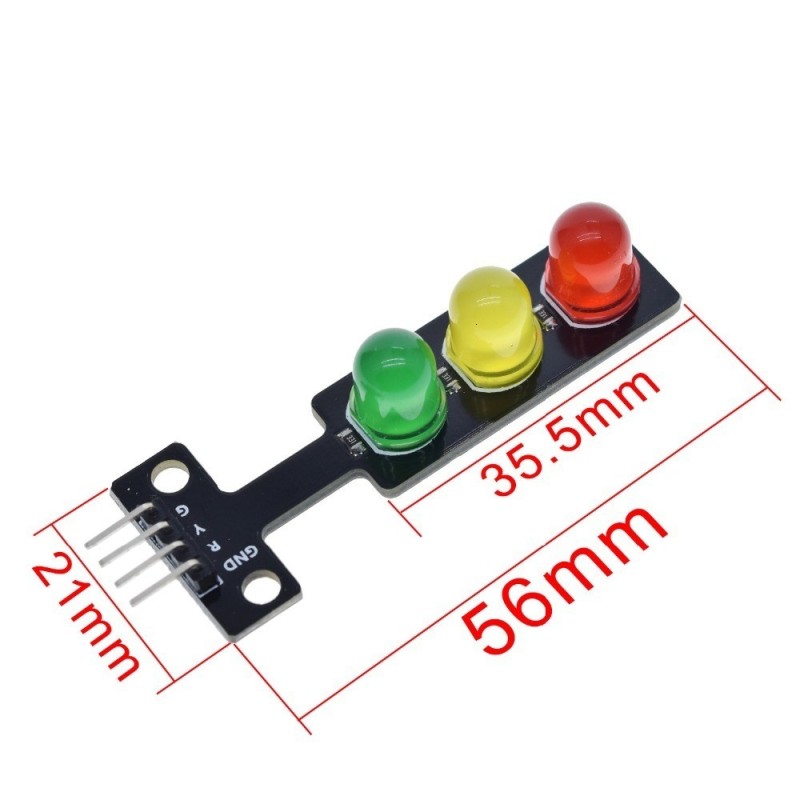
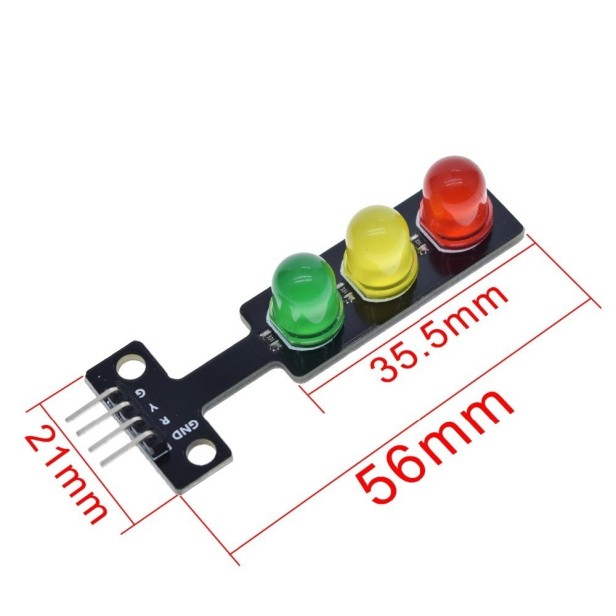
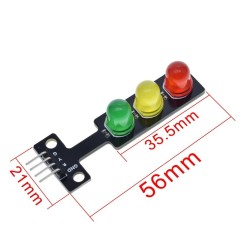
This traffic light module with 3×10 mm LEDs is ideal for learning Arduino programming, practicing sequential logic, and simulating real traffic lights in STEM, educational robotics and basic electronics.
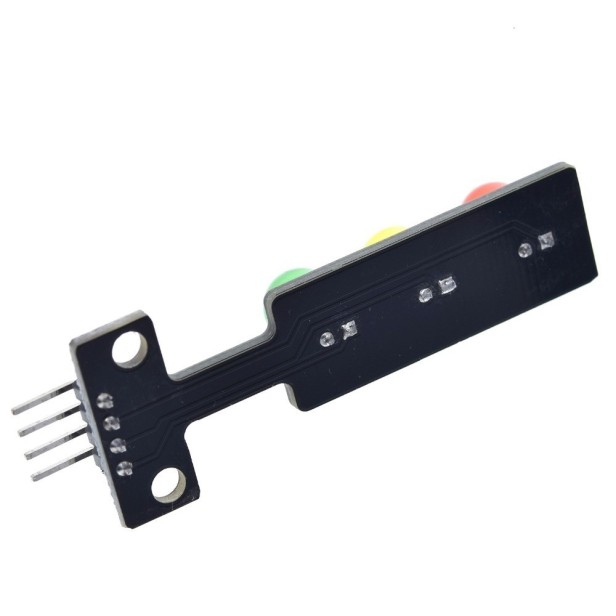
It includes three large, high-visibility LEDs in red, yellow and green, mounted on a compact PCB with direct-connection pins. Simply connect it to your development board and control each LED through a digital output.
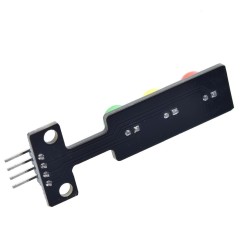
The module includes 4 pins for easy connection to a breadboard or your Arduino board using Dupont jumper wires:
The module runs on 5 V, making it compatible with most Arduino boards and other 5 V microcontrollers.
Is it compatible with Arduino?
Yes. It works with any 5 V Arduino board (UNO, Nano, Mega, etc.). Simply connect R, Y and G to digital pins and GND to ground.
Does it need external resistors?
Depending on your board and project, you may want to add resistors to limit LED current. In low-power educational projects, it can often be connected directly to Arduino pins as long as you respect the board’s current limits.
Is it suitable for classroom use?
Absolutely. This module is very visual and durable, ideal for teaching how traffic lights work, timing sequences and basic programming to students.